My name is Jenny, and I am an over-packer.
I have accepted this about myself. My suitcase may contain one too many outfit options, but there are a few things I pack because they make travel easier when something does not go according to plan.
Some are actual safety gadgets. Others are backups, habits, or bits of information I want available before I ever need them. Together, they give me options when I am far from home.
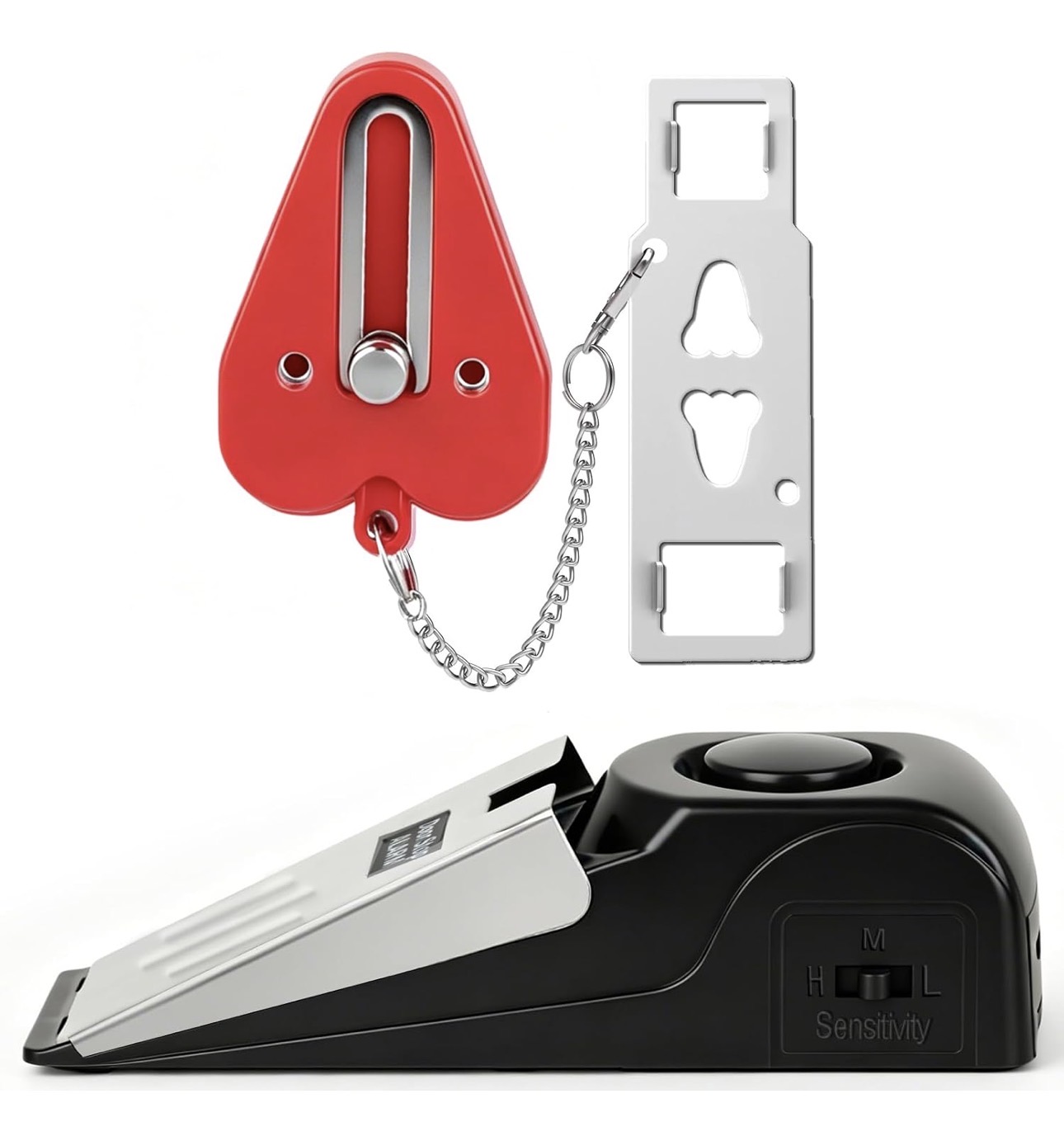
1. A wedge door-stop alarm
A door-stop alarm earns a permanent place in my bag, especially when I am staying alone. It wedges beneath an inward-opening door and lets out an extremely loud alarm if the door is pushed against it.
I like it because it is small, inexpensive, and easy to use. The only lesson I learned the loud way: move it before you open the door yourself. Mine uses a 9V battery, so checking the battery before a trip is now part of the packing ritual.
2. A portable carbon monoxide alarm
Carbon monoxide is colorless and odorless, which is exactly why I do not want to depend on my senses to know there is a problem. I also do not assume every hotel, rental, cabin, or guesthouse will have a working detector exactly where I would want one.
A compact portable alarm takes up very little luggage space. I test mine before a trip, pack fresh batteries if the model requires them, and follow the manufacturer’s placement instructions once I arrive.
3. A bag that makes opportunistic theft harder
I like an anti-theft bag, but the label matters less to me than the design. I want something that closes securely, stays close to my body, and makes it difficult for someone to reach inside without me noticing.
Locking zippers, hidden pockets, slash-resistant materials, and straps that are difficult to cut can all be useful. None of that replaces paying attention in crowded markets, transit stations, nightlife districts, or other places where quick pickpocketing can happen—but making myself a less convenient target certainly does not hurt.
4. A portable door lock
I also travel with one of the small portable locks designed to reinforce a hotel or rental door from the inside. It gives me another physical layer of security when the door and frame are compatible with it.
The important part is knowing how your particular device works before you need it. Practice at home, make sure it fits the type of door you are using, and make sure you can remove it quickly. I would never use an added lock in a way that could keep me from getting out during an emergency.
5. A phone plan that works before I need it
International roaming, an eSIM, or a local SIM can all accomplish the same basic goal: I want working data and calling capability when I am away from dependable Wi-Fi.
I learned how important that was in San Marcos, Lake Atitlán, when a host’s “10-minute nature walk” turned into a much longer cliffside hike and I stopped recognizing the route. Being able to contact the host immediately mattered a lot more to me in that moment than whatever I had saved by choosing the cutest cabin on the mountain.
Before heading somewhere unfamiliar, I also download the local area in my maps app for offline use and save the accommodation address somewhere I can reach without internet.
6. A charged power bank
My phone is usually my map, translator, boarding pass, ride-share access, hotel confirmation, camera, and connection back home. A dead battery can turn several small inconveniences into one large problem.
A compact power bank lives in my personal item on travel days. So does the cable required to actually use it, because carrying one without the other feels exactly like something I would do.
7. More than one way to pay
Losing my debit card while traveling in Mexico cured me of keeping every payment method in the same wallet.
Now I prefer redundancy: at least two usable cards when possible, stored separately, plus a modest amount of cash appropriate for the destination. If one wallet disappears, one card freezes, or a payment network decides today is the day it hates me, I am not immediately stranded.
I also keep the issuer’s international support number somewhere other than on the card itself.
8. Offline copies of the boring-but-important stuff
I keep secure copies of the information I would hate to reconstruct during an emergency: passport and visa details, travel insurance information, accommodation details, important phone numbers, and an emergency contact.
I want at least some of that available offline. A dead phone, stolen bag, or inaccessible email account is a terrible time to discover that every useful detail about your trip lives behind the same device.
For U.S. travelers, the State Department also recommends keeping copies of travel documents and leaving a copy with a trusted person at home.
9. Travel medical coverage I have actually read
Travel insurance is not the sexy part of trip planning, but neither is receiving an enormous medical bill in a country where your regular insurance does not follow you.
Before international travel, I check what my existing health coverage does and does not cover abroad. If I purchase travel insurance, I look specifically at emergency medical care, medical evacuation, trip interruption, the destinations covered, and any exclusions that might apply to what I plan to do.
The fine print actually matters here. “Travel insurance” can mean very different things depending on the policy.
10. Medication, plus the information that goes with it
If I take medication, I do not want the entire supply buried in a checked suitcase that might decide to vacation somewhere else.
I keep essential medication accessible, carry enough for the trip with a reasonable cushion when possible, and check destination rules before traveling with anything that may be restricted or controlled. For prescriptions I may need to replace, I keep the medication name, dosage, and prescriber information available offline.
11. Someone at home who knows the basics
I do not send anyone a minute-by-minute itinerary, but at least one trusted person should know the broad strokes of where I am: destination, accommodation, and any major transportation details that would matter if I suddenly became unreachable.
For U.S. citizens traveling abroad, the free Smart Traveler Enrollment Program (STEP) can also send embassy or consulate alerts for a destination and help officials reach you or your emergency contact during an emergency.
12. A two-minute accommodation check
Before I unpack and scatter my belongings across every available surface, I do a quick scan of the room. Does the main door lock properly? Do accessible windows secure? Where is the nearest usable exit? Are smoke and carbon monoxide alarms present? Do I know how to reach the host or front desk after hours?
This is also when the door alarm, portable lock, and carbon monoxide detector come out of my bag rather than remaining beautifully packed and completely useless.
If something feels materially wrong, I would rather address it when I arrive than discover it at 2:00 a.m.
13. A transportation backup plan
I save the address of my accommodation in the local language when relevant, keep enough battery to request a ride or navigate transit, and try not to let one transportation option be my only way out of somewhere.
When using a ride-share service, I verify the vehicle and driver details in the app before getting in. If I am somewhere unfamiliar or arriving late, sharing the trip status with someone I trust takes only a few seconds.
The short version
If I had to reduce this entire list to one idea, it would be this: give yourself options.
A door alarm. A carbon monoxide detector. A secure bag. An extra lock. A second card. A charged battery. An offline address. A working phone. A person who knows where you are. Most of the time, I will never need the backup plan—which is exactly how I like it.
Then I can get back to the important business of traveling: finding something good to eat, wandering somewhere beautiful, and trying not to pack six pairs of shoes next time.
Adventure abound! Until next time, Wanderers.