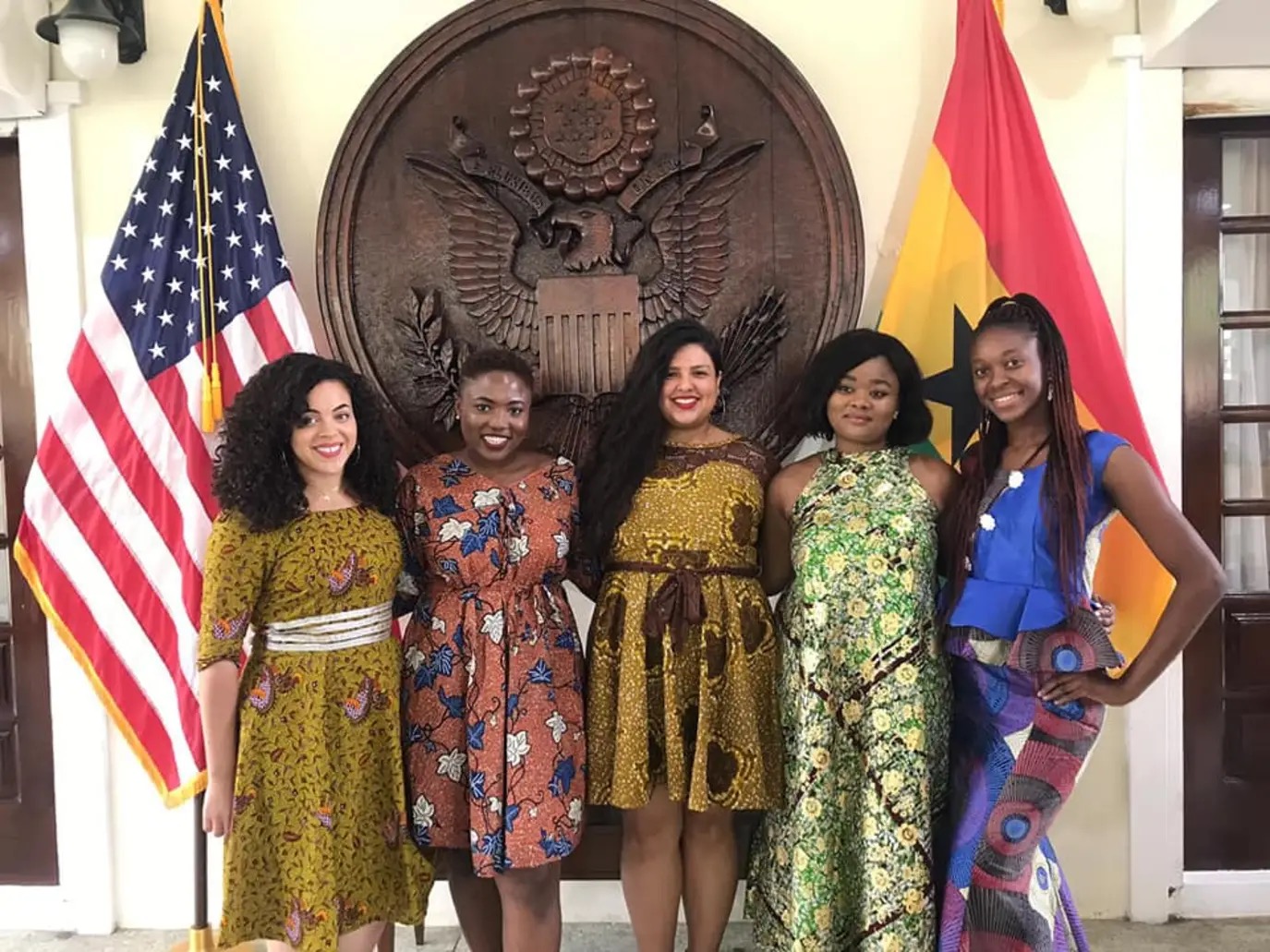
What image does your mind conjure when you hear, Peace Corps Volunteer?
Prior to 2019, I would see a white, 20-something with hair in need of a cut (or maybe it’s already been shaved). They’re wearing hiking cargo pants with Teva sandals, holding a Nalgene water bottle—a HydroFlask if they’re fancy. They obviously have wealthy parents because who gets to drop out of society for 27 months to live on less than $100 a month in an underserved, remote village abroad?
When I applied to join the organization in 2018, the only things I had in common with this image was that I was a 20-something who owned a Nalgene water bottle. If you’ve read “Happily Ever Ghana”—my fairytale take on why I ended up applying for a volunteer position in the first place, you know my road to the Peace Corps was a bit unorthodox. Or maybe it wasn’t.
I’m certainly not the first girl who based a major life decision on the fact that she wanted to be with a boy (I bet you want to read that post now. You can pause here and check it out. I’ll wait!).
The first few days in Ghana as a Peace Corps trainee went by pretty quickly. I only have a few concrete memories of the week we spent at that compound (was it even just one week?). I do remember the talent show we held within the first few nights. Two of my colleagues and I sang “My Girl” by the Temptations. I also played the role of background dancer/ hype woman for a little girl who wanted to join the fun.
I don’t know why she chose me for emotional support, but I was more than happy to make a fool of myself to make her feel comfortable. I also remember a colleague and I sneaking in and out of the compound to go into town (that is, unless my former country director is reading this. In which case, my memory deceives me. I never left the compound unauthorized).
The first part of any Peace Corps service is Pre-Service Training (PST). This intensive 10-week training program covers local language training, sector-specific technical training, development skills, and cross-cultural understanding. Only after successfully completing this training and a final test, does one officially become a Peace Corps Volunteer (PCV). It was a grueling experience marked by day-long, back-to-back training sessions—most volunteers will say this is the hardest part of service.
I would have to agree. This is also when trainees are paired with a local host family. I was placed with the most amazing family, mama Adwoa and her grandson (and my best bud), baby Kobby. Given the intensity of this period, I was blessed to go home to them every day.
Being a black woman in the Peace Corps is not necessarily unheard of, but it’s certainly not the norm. Being in West Africa—I suppose some part of me expected to avoid certain biases. Unfortunately, this wasn’t the case. A black woman in my cohort dealt with hair discrimination, and I experienced various instances where I was singled out.
At one point I was called away from the training community to the main office in Accra for a disciplinary meeting with senior leadership. To be clear, I had absolutely engaged in shenanigans that could have justified a conversation. The complaints that actually prompted the meeting, however, were so petty that by the end it seemed everyone in the room understood the escalation had been disproportionate. A few weeks later, the country director apologized to me.
I was vocal about what I believed Black volunteers were experiencing. Eventually, site staff brought several of us together for a conversation about those concerns.
I went in hopeful.
Then a staff member said, openly, that Black volunteers had to be treated more harshly to prepare us for the communities where we would serve.
That was the moment the conversation lost me.
No explanation could make hair discrimination or unequal standards feel like preparation—especially while we were sitting in Ghana.
With time, I have become more comfortable holding two truths at once: Peace Corps gave me some of the most meaningful experiences of my life, and parts of the institution and my service experience deserve criticism. Gratitude does not require silence. Belonging does not require pretending everything worked exactly as it should have.
There is much so more to say about my service. But for now, I will end on this note: Despite the issues I faced as a black woman in the Peace Corps, I have zero regrets about my service. It was chaotic, challenging, frustrating, enriching, eye-opening, and so much fun. For the most part, my default image of the average PCV hasn’t changed, even after my service. But, I am a Returned Peace Corps Volunteer, as are the four other black women in my cohort.
We even had a retiree in the bunch, so who’s to say what a PCV looks like? You don’t have to fit the typical mold to belong in this space. After all, the best part of belonging is that you have to be yourself.